
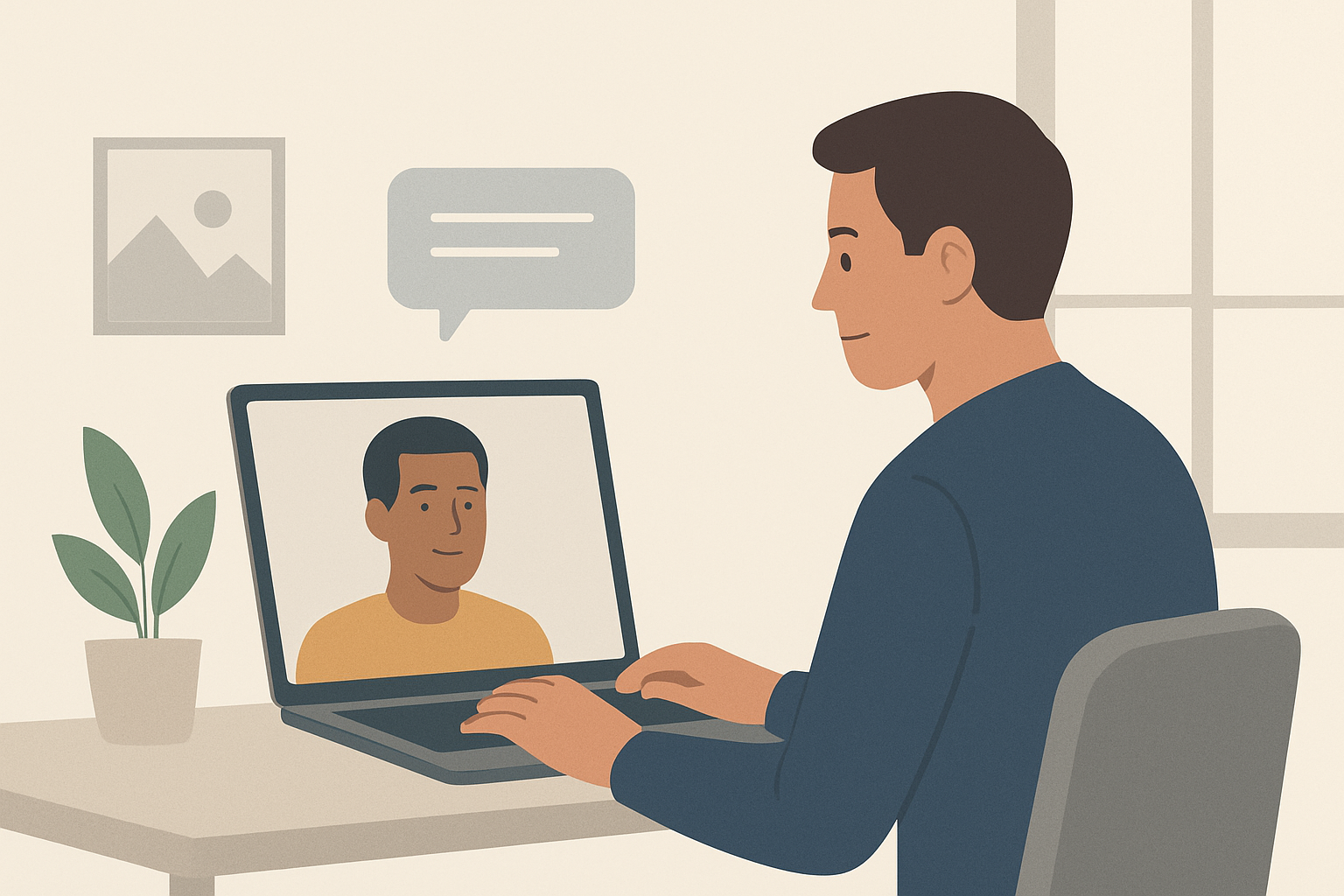
What is Teletherapy?
Teletherapy is a term you may not have heard of but it describes mental health counselling or therapy delivered remotely, usually through video calls, phone calls, or secure messaging platforms. It allows people to meet with licensed therapists without being in the same physical location.
Although more commonly used in the USA the NHS in the UK also use the term alongside “digitally-enabled care” or “online therapy” to describe digital mental health services.
Teletherapy Key features
- Video sessions (most common)
- Phone therapy
- Text-based or chat therapy on secure apps or platforms
- Remote assessments and follow-ups
Benefits
- Easier access if you live far from providers
- Flexible scheduling
- Comfortable home environment
- Useful for mobility limitations or during travel
What it’s used for
Teletherapy can help with many of the same issues as in-person therapy, including anxiety, depression, stress, relationship concerns, trauma, and more.
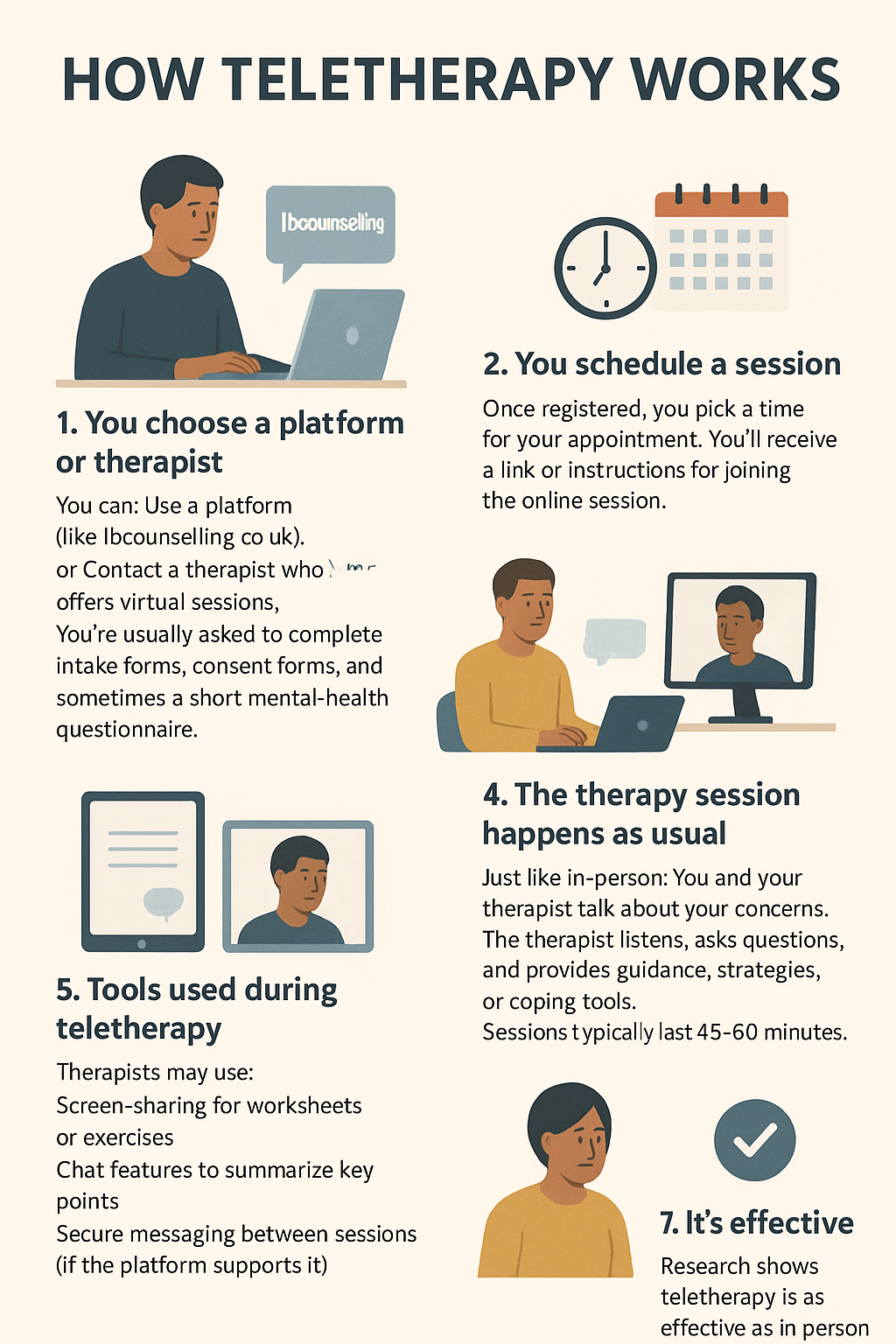
Teletherapy works very much like in-person therapy, but the interaction happens through technology instead of a shared office. Here’s a clear step-by-step breakdown:
1. You choose a platform or therapist
You can:
Contact a therapist who offers virtual sessions (for instance ibcounselling.co.uk) .
You’re usually asked to complete intake forms, consent forms, and sometimes a short mental-health questionnaire.
2. You schedule a session
Once registered, you pick a time for your appointment. You’ll receive a link or instructions for joining the online session.
3. You join the session
At the scheduled time:
Click the link to a secure video call (most common),
Call a phone number, or
Connect through a secure messaging system.
Therapists use HIPAA-compliant or privacy-protected platforms to keep your information safe.
4. The therapy session happens as usual
Just like in person:
You and your therapist talk about your concerns.
The therapist listens, asks questions, and provides guidance, strategies, or coping tools.
Sessions typically last 45–60 minutes.
5. Tools used during teletherapy
Therapists may use:
Screen-sharing for worksheets or exercises
Chat features to summarize key points
Secure messaging between sessions (if the platform supports it)
6. After the session
You may:
Schedule your next appointment
Receive follow-up resources or coping strategies
Have access to messaging for questions (depending on your provider)
7. It’s effective
Research shows teletherapy is as effective as in-person therapy for many conditions, including anxiety, depression, stress management, trauma-related issues, and relationship concerns.
Ian Baker
Member of The British Association for Counselling & Psychotherapy (BACP),
The College of Sexual and Relational Therapists (COSRT),
The Society for the Advancement of Sexual Health (SASH).
Member of Association for the Treatment of Sexual addiction and Compulsivity (ATSAC)
Member of Specialist Treatment Organisation for the Prevention of Sexual Offending (STOPSO)
For Further information about my qualifications and accreditations see here
Need help with Sex Addiction?
Contact me in confidence here or call me on 07881 532524