
Healing after betrayal trauma can feel paradoxical and confusing. A person may want answers while feeling overwhelmed by them. They may long for closeness while fearing intimacy. They may hope the relationship can recover while also questioning whether staying is emotionally safe.
For partners affected by sexual addiction, compulsive sexual behaviour or prolonged deception, recovery is not simply about saving the relationship. It is also about restoring personal identity, emotional stability, physical wellbeing and the ability to trust one’s own experience.
There is no single correct outcome. Some relationships move towards reconciliation and renewed intimacy. Others end, allowing the injured partner to create a safer and more authentic life separately.
In either situation, healing matters independently of the relationship’s future.
This article continues our guide to understanding betrayal trauma, gaslighting, shame and discovery.
How Betrayal Can Affect Sex and Intimacy
Sex and intimacy are often associated with love, pleasure, vulnerability and connection. Following betrayal, however, sexuality can become complicated, uncertain or painful.
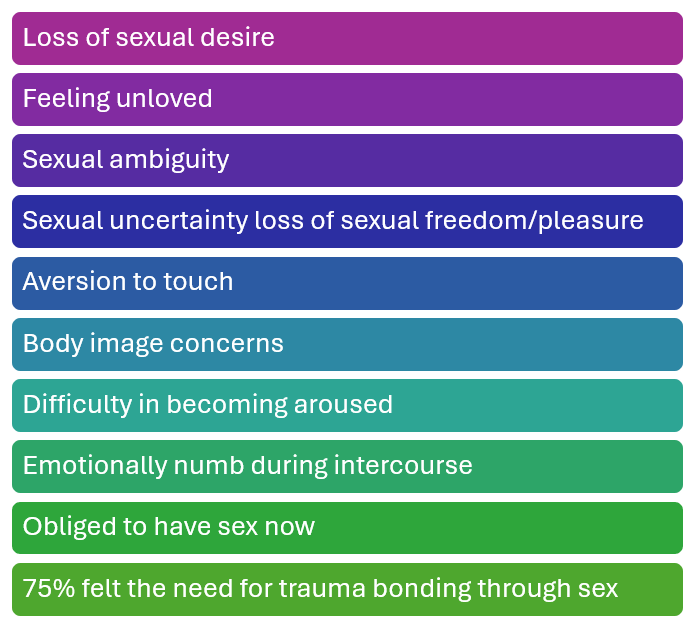
The body and mind may no longer experience intimacy as safe. What previously felt natural can become connected to fear, obligation, comparison, rejection or memories of deception.
Possible effects include:
- Loss of sexual desire.
- Feeling unloved or unwanted.
- Confusion about personal desire.
- Loss of sexual freedom or pleasure.
- Aversion to touch.
- Body image concerns.
- Difficulty becoming aroused.
- Emotional numbness during sex.
- Feeling obliged to provide sex.
- Using sex to temporarily repair emotional disconnection.
Loss of Sexual Desire
Trauma, stress, exhaustion and emotional insecurity can significantly reduce sexual desire.
A loss of libido does not necessarily indicate a lack of love or attraction. It may be the mind and body’s response to feeling unsafe, overwhelmed or disconnected.
When trust has been damaged, the nervous system may prioritise protection over pleasure.
Feeling Unloved or Undesirable
Following the discovery of sexual behaviour outside the relationship, many partners compare themselves with other people, images or behaviours associated with the betrayal.
This can create painful questions about attractiveness, ageing, body image and sexual adequacy.
These comparisons can obscure an important truth: the partner’s appearance or worth did not cause the deceptive or compulsive behaviour.
Sexual Ambiguity and Uncertainty
After betrayal, a person may become unsure about their own desires and boundaries.
They may ask:
- Do I genuinely want sexual contact?
- Am I doing this to keep the relationship together?
- Am I seeking reassurance through sex?
- Will saying no create more distance?
- Can I trust my body’s response?
These questions deserve time and compassion. Consent and personal autonomy remain essential within every relationship, including during recovery.
Loss of Sexual Freedom and Pleasure
When sex becomes associated with pressure, guilt, fear or past pain, pleasure can disappear.
Intimacy may begin to feel like a task or obligation rather than a freely chosen expression of connection.
No one owes sex to a partner. Healthy sexual contact requires mutual desire, consent and the freedom to stop or change one’s mind.
Aversion to Touch
Touch that once felt comforting may trigger anxiety, anger or withdrawal after betrayal.
The body can associate physical closeness with emotional danger. A person may want affection in principle but find that their body reacts by becoming tense, numb or distressed.
This does not mean that intimacy can never be restored. It may indicate that emotional and physical safety need to be rebuilt gradually.
Difficulty With Arousal
Emotional safety and physical arousal are closely connected. Anxiety, intrusive thoughts, depression, unresolved trauma and relationship stress may interfere with the body’s sexual responses.
This can happen even when affection or attraction remains present.
Emotional Numbness During Sex
Some people describe feeling disconnected, absent or “checked out” during sexual experiences.
Emotional numbness can function as a protective response when the experience feels overwhelming, unsafe or inconsistent with personal boundaries.
This response should not be treated as a performance problem. It may be a signal that the person needs greater safety, choice and therapeutic support.
Trauma Bonding Through Sex
In some relationships, sexual contact becomes part of a repeating cycle of conflict, fear, reconciliation and intense closeness.
Sex may temporarily reduce anxiety or create a sense of reconnection without resolving the underlying deception or relational harm.
This can leave a person simultaneously seeking intimacy and experiencing emotional pain.
Intimacy Must Not Be Rebuilt Before Safety
There can be pressure after betrayal to restore physical closeness quickly as evidence that the relationship is improving.
However, asking an injured partner to become more vulnerable while deception, gaslighting or repeated relapse remains active may deepen the harm.
Relationship work should not require the affected partner to lower their defences in an environment that remains unsafe.
Before focusing on renewed intimacy, it may be necessary to establish:
- Consistent honesty.
- Reduced risk of further deception.
- Clear accountability.
- Respect for personal boundaries.
- Empathy for the injured partner.
- Evidence of behavioural and relational change.
Specialist psychosexual therapy may help individuals or couples explore the sexual impact of betrayal without pressure or shame.
Healing Beside the Hurt
Partners of people affected by sex addiction or compulsive sexual behaviour are sometimes overlooked within recovery work.
Attention may focus on stopping the behaviour, managing cravings or preventing relapse. The partner, meanwhile, may be living with shock, intrusive thoughts, damaged self-esteem and a profound loss of safety.
The affected partner deserves their own support and recovery process. They are not simply an observer of someone else’s treatment.
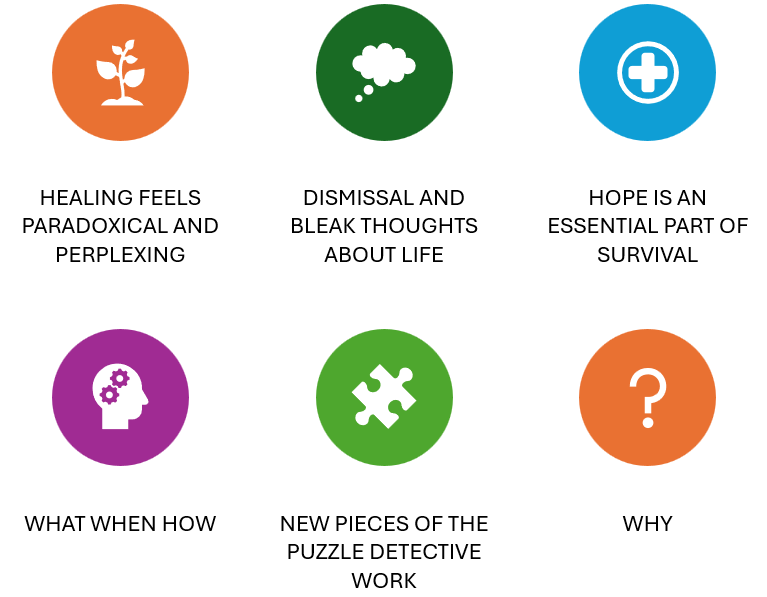
Six Pillars of Partner Recovery
1. Personal Growth: Reclaiming Yourself
After discovery or disclosure, a person’s identity may become consumed by the addiction, the investigation and the consequences for the relationship.
Healing includes reconnecting with yourself as an individual rather than only as a partner, spouse, carer or investigator.
Personal growth may involve:
- Rediscovering interests and passions.
- Reconnecting with supportive people.
- Establishing healthier boundaries.
- Prioritising emotional wellbeing.
- Identifying personal values and future goals.
- Accepting that your recovery matters too.
2. Reflection: Understanding Your Experience
Healing requires space to process what happened and how it affected you.
Reflection may help you:
- Identify the emotional impact of the deception.
- Understand personal triggers and fears.
- Separate your partner’s choices from your own worth.
- Consider what trust means to you now.
- Recognise which boundaries were crossed.
- Explore what emotional safety would look like moving forward.
Journalling, individual therapy and appropriate support groups may provide opportunities for reflection without requiring immediate decisions about the relationship.
3. Health and Self-Care
Betrayal trauma can affect both mind and body. Anxiety, exhaustion, sleep disturbance and chronic physical tension are common responses.
Supporting physical and emotional health may involve:
- Maintaining regular meals.
- Prioritising rest where possible.
- Engaging in gentle exercise or movement.
- Reducing unnecessary sources of stress.
- Using grounding or mindfulness techniques.
- Seeking professional support when needed.
Self-care is not an indulgence. It is part of rebuilding stability after a period of emotional upheaval.
4. Developing Healthy Coping Skills
Following discovery, many people live in survival mode. Healthy coping strategies can help restore a sense of stability even when the future remains uncertain.
Helpful approaches may include:
- Grounding and breathing exercises.
- Talking with trusted friends or family.
- Setting limits around difficult conversations.
- Taking breaks from repeated questioning.
- Creating routines that are not centred on the relationship crisis.
- Learning to tolerate difficult emotions without self-blame.
5. Putting the Pieces Together
Sexual addiction and deception can leave a relationship feeling fragmented. Communication may be damaged, future plans disrupted and shared memories reinterpreted.
Putting the pieces together may require identifying what is missing:
- Emotional safety.
- Honest communication.
- Accountability.
- Mutual respect.
- Personal autonomy.
- Consistent boundaries.
Not every relationship survives, and not every person chooses reconciliation. Rebuilding your life means creating something that aligns with your needs and values, regardless of whether the relationship continues.
6. Asking Questions and Seeking Answers
Recovery often involves learning to ask questions that focus not only on what happened, but on what you need now.
These may include:
- What do I need to feel safe?
- Which boundaries are important to me?
- What would genuine accountability look like?
- Can trust realistically be rebuilt?
- What does recovery require from both of us?
- What kind of future do I want?
These questions do not always have immediate answers. Healing is a process, not a deadline.
You Did Not Cause the Sexual Behaviour
Partners frequently wonder whether they were attractive enough, sexually available enough, loving enough or attentive enough.
Compulsive or deceptive sexual behaviour is not caused by a partner’s appearance, ageing, body, sexual performance or personal shortcomings.
Recovery requires responsibility from the person whose behaviour caused harm and compassionate support for the person affected by it.
Understanding Compulsive Sexual Behaviour
Problematic sexual behaviour is described through several different models and terms.
“Sex addiction” remains widely understood by clients and within many recovery communities. In more formal clinical contexts, the term Compulsive Sexual Behaviour Disorder may be used.
No single explanation applies to everyone. Contributing factors may include:
- Family-of-origin dynamics.
- Enmeshment and unhealthy relational systems.
- Attachment wounds.
- Trauma histories.
- Neurodiversity, including ADHD.
- Dopamine-seeking and emotional regulation.
- Cultural attitudes towards sexuality.
- Gender socialisation and entitlement.
These factors may help explain how behaviour developed, but they do not remove personal responsibility.
Learn more about sex addiction counselling and compulsive sexual behaviour.
Recovery Is More Than Abstinence
One of the most important distinctions in behavioural addiction work is that recovery is not demonstrated by abstinence alone.
Sexuality is an intrinsic part of being human. The goal is not simply to remove sexuality, but to understand how sexual behaviour is regulated, expressed and integrated with personal values and relationships.
Stopping a particular behaviour may be an important first step, but meaningful recovery must also involve:
- Understanding triggers and patterns.
- Learning to manage cravings and emotional states.
- Developing honesty and transparency.
- Increasing empathy.
- Respecting relational and sexual boundaries.
- Taking responsibility for deceptive behaviour.
- Demonstrating sustained change over time.
Recovery is change, not simply the absence of a behaviour.
The Often-Ignored Role of Deception
When problematic sexual behaviour occurs within a relationship, the harm is not limited to the sexual behaviour itself.
The system used to conceal it may include:
- Lying.
- Withholding information.
- Gaslighting.
- Minimisation.
- Misdirection.
- Manipulated timelines.
- Compartmentalised identities.
There are therefore two interconnected areas that require attention:
- The sexual or compulsive behaviour.
- The deception used to maintain and conceal it.
Addressing only the sexual behaviour may leave the underlying relational injury untouched.
What Is Deceptive Sexuality?
The term deceptive sexuality can help describe patterns where sexual or relational behaviour occurs within a deliberately hidden reality.
Deceptive
The behaviour has not been openly discussed, negotiated or consented to within the relationship. It violates explicit or implicit boundaries and is concealed through lies, omissions or misdirection.
Compartmentalised
The behaviour is separated from the person’s public identity and stated values. There may be a significant difference between how the person presents themselves and what is occurring privately.
Sexual and Relational
The behaviour involves repeated sexual or relational boundary violations. This might include affairs, hidden pornography use, sexual encounters or emotionally intimate relationships.
Reality Distortion
The partner is encouraged to believe one version of the relationship while another reality is deliberately concealed.
This can fundamentally alter the injured partner’s ability to understand their own relationship experience and make informed choices.
The Influence of Culture and Gender
Recovery work may also need to consider wider cultural influences.
Messages about masculinity, entitlement, emotional expression, sexuality and relationships can shape behaviour. Some attitudes may normalise secrecy, emotional avoidance or sexual entitlement.
Recognising these influences is not about removing responsibility. It is about understanding the wider context in which behaviours may develop and be reinforced.
Trust Requires Visible Evidence of Change
Trust cannot be restored through reassurance, promises or short periods of abstinence alone.
It grows through:
- Consistent honesty.
- Accountability without defensiveness.
- Transparency.
- Respect for boundaries.
- Developing empathy.
- Listening to the injured partner.
- Demonstrated behavioural change.
- Change maintained over time.
The partner should not be expected to trust before sufficient evidence exists.
Healing Is About More Than Saving the Relationship
Sometimes recovery leads to reconciliation, renewed intimacy and a healthier relationship.
Sometimes it leads to separation and the beginning of a different life.
In either case, healing is about restoring your sense of identity, peace, autonomy and emotional security.
You are allowed to recover independently of the relationship’s outcome.
Professional Support
Specialist therapy may help individuals and couples explore the emotional, relational and sexual consequences of betrayal.
Depending on your needs, support may include:
- Therapy for partners affected by sexual addiction
- Psychosexual therapy
- Relationship counselling
- Sex addiction and compulsive sexual behaviour counselling
- Porn addiction recovery
- Confidential online therapy
Frequently Asked Questions
Can intimacy return after betrayal?
Intimacy may sometimes be rebuilt, but emotional and physical safety need to come first. The process should not involve pressure, obligation or expectations that the injured partner must become vulnerable before meaningful change has occurred.
Is a loss of sexual desire normal after betrayal?
A reduction in desire can be an understandable response to stress, trauma, emotional exhaustion and loss of safety. It does not necessarily mean that love or attraction has disappeared.
Does stopping the behaviour mean recovery has happened?
Stopping a behaviour may be an important step, but recovery also requires honesty, emotional growth, accountability, empathy and evidence that the underlying patterns are changing.
Must I remain in the relationship to recover?
No. Recovery and reconciliation are different processes. You may heal while remaining in the relationship, while deciding what you want, or after leaving it.
Can couples counselling begin immediately after discovery?
Relationship work may be helpful, but it should not be used to pressure the injured partner into forgiveness, trust or vulnerability. Continuing deception and instability may need to be addressed before joint work can become emotionally safe.
Support for Healing and Recovery
You do not have to navigate betrayal, sexual uncertainty or the consequences of compulsive behaviour alone. Specialist therapy can provide space to understand your experience, identify your boundaries and decide what recovery means for you.
Learn more about confidential online therapy with IB Counselling.
Return to Part One: Understanding Betrayal Trauma: The Hidden Cycle of Lies, Gaslighting, Shame and Discovery.
Source theme: Aghamiri et al. (2024), comprehensive research into the lived experiences and wellbeing of partners following discovery or disclosure of compulsive sexual behaviours or sexual addiction.